
What Professional Car Wrapping Looks Like: Before and After
What Separates a Quality Wrap from a Bad One?
Car wrapping has become enormously popular in Dubai, and with good reason — it transforms a vehicle's appearance at a fraction of the cost of a respray. But the gap between a professional installation and a budget job is enormous. Understanding what quality wrapping looks like helps you choose the right workshop and avoid costly mistakes.
This guide walks through the complete professional process, from initial consultation to final quality check, so you know exactly what to expect.
Step 1: Vehicle Assessment and Consultation
A professional wrapper begins with a thorough vehicle inspection. They check for existing paint damage, stone chips, dents, and rust spots. Any imperfection in the paint surface will telegraph through the wrap — a wrap amplifies flaws rather than hiding them.
Good workshops in Al Quoz and Dubai Investment Park will photograph the vehicle from every angle before starting. This documentation protects both the customer and the shop. If there is existing paint damage, a reputable installer will point it out and may recommend paint protection film (PPF) for damaged areas before wrapping over them.
During the consultation, you will choose your material. The installer should explain the differences between cast vinyl, calendered vinyl, and specialty finishes, and recommend the right material for your vehicle type and budget.
Step 2: Surface Preparation
This is where cheap wraps and quality wraps diverge most dramatically. Professional surface preparation takes two to four hours — sometimes longer for vehicles with heavy contamination.
The process includes:
- Full exterior wash using a decontamination shampoo to remove road film, tar, and tree sap
- Clay bar treatment to pull embedded contaminants from the clear coat
- Isopropyl alcohol (IPA) wipe-down of every panel to remove wax, sealant, and silicone residues that prevent adhesion
- Tack cloth pass immediately before application to remove dust and lint
Budget workshops often skip straight to the IPA wipe, or worse, just give the car a quick rinse. The result is poor adhesion, early lifting, and bubbles — problems that surface weeks or months later, long after you have paid.
Step 3: Panel Removal and Disassembly
One of the clearest indicators of a professional installation is panel removal. Quality shops remove:
- Door handles
- Wing mirrors
- Badges and emblems
- Rubber trim and weatherstripping (where feasible)
- Headlight and taillight surrounds (on some vehicles)
Removing these components allows the film to be tucked behind edges for a seamless, factory-like finish. Budget wraps simply cut the film around these obstacles, leaving visible seams and exposed edges that peel within months.
Panel removal adds two to three hours to the job but is the single biggest factor in wrap longevity. When getting quotes, ask specifically whether panel removal is included — it is a telling question that separates professionals from amateurs.
Step 4: Film Application
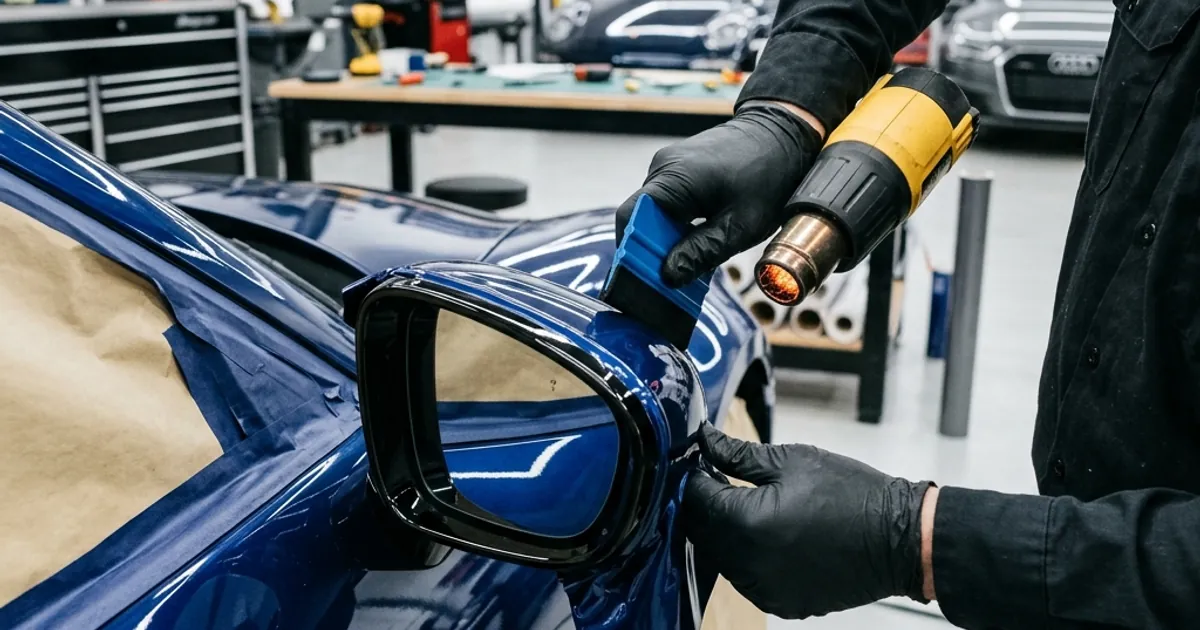
Professional application is done in a controlled environment. Top Dubai workshops use temperature-controlled bays (ideally 18–24°C) with positive air pressure to keep dust out. The film is applied panel by panel, using heat guns, squeegees, and precision cutting tools.
Key techniques that define professional work:
- Wet application on flat panels for bubble-free results
- Stretch and heat conforming on curves, using an infrared thermometer to monitor film temperature (overheating damages the adhesive)
- Knifeless cutting tape instead of blades on painted surfaces — blade cuts can score the clear coat
- Relief cuts at stress points to prevent tension cracking over time
A full colour-change wrap on a sedan takes a professional team 12 to 20 hours spread over two to three days. Anyone promising a full wrap in a single day is cutting corners.
Step 5: Post-Heat Treatment
After the film is applied, every edge, tuck, and seam is post-heated. This critical step activates the adhesive's memory, telling the film to stay in its stretched position. Without post-heating, the film slowly contracts and lifts at the edges.
Professional workshops use infrared heat lamps or heat guns at precisely controlled temperatures — typically 90–110°C applied for three to five seconds per area. Under-heating leaves the adhesive partially activated; over-heating damages the film and can cause discolouration.
In Dubai's climate, post-heat treatment is especially important. The extreme ambient heat accelerates film contraction, so edges that are not properly post-heated can start lifting within weeks of installation.
Step 6: Reassembly and Quality Check
Components are reinstalled, and the vehicle undergoes a final inspection. Professional shops check every edge under bright LED inspection lights, looking for:
- Micro-bubbles trapped beneath the film
- Dust or lint contamination under the wrap
- Edge lifting or insufficient tuck
- Colour consistency between panels
- Clean cuts with no jagged edges
Any imperfections are corrected before the vehicle is returned. Reputable workshops offer a workmanship guarantee — typically 12 to 24 months — covering installation defects like lifting, bubbling, and peeling.
Common Mistakes in Cheap Wraps
Knowing the professional process helps you spot a substandard wrap:
- Visible seams around door handles and mirrors (components were not removed)
- Film cut short of edges, exposing original paint at panel borders
- Bubbles or dust specks under the film (poor prep)
- Orange peel texture on flat panels (over-stretched film)
- Blade marks on paint around trim pieces (blade used instead of knifeless tape)
These issues are not just cosmetic. They shorten the wrap's lifespan and can damage the underlying paint, costing you more in the long run.
Choosing the Right Workshop
Price is not always an indicator of quality, but unusually low prices are a red flag. A full sedan wrap below AED 3,000 almost certainly involves calendered film and skipped preparation steps. Professional full wraps using cast vinyl from reputable brands start at AED 4,500 for a sedan in Dubai.
Look for workshops with a portfolio of completed work, positive Google reviews, and certifications from film manufacturers like 3M, Avery Dennison, or KPMF. Browse our directory of rated car wrapping businesses to find qualified installers in your area.